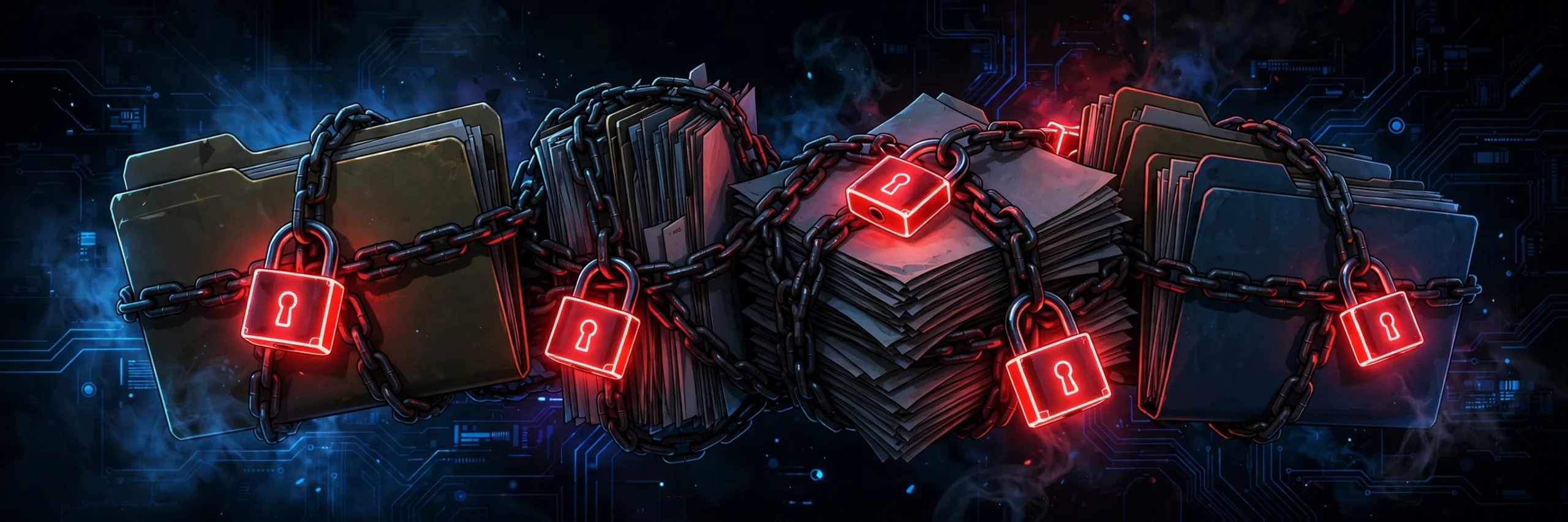
Ransomware is the digital equivalent of a kidnapping — except the hostage is your own data. Attackers encrypt your files and demand payment, usually in cryptocurrency, for the decryption key. Here's how it works and how to stay safe.
How a Ransomware Attack Unfolds
- Infection — It starts like most attacks: a phishing email, a malicious download, or an unpatched vulnerability.
- Encryption — The malware silently encrypts your documents, photos, and databases with strong cryptography.
- The ransom note — A message appears demanding payment, often with a countdown timer to pressure you.
- The dilemma — Pay (funding criminals, with no guarantee of recovery) or lose the data.
Modern gangs add double extortion: they steal your data first, then threaten to leak it publicly if you don't pay.
Famous Ransomware Attacks
- WannaCry (2017) — Spread worldwide in hours, crippling hospitals and businesses across 150 countries.
- Colonial Pipeline (2021) — Shut down a major US fuel pipeline; the company paid millions.
- Countless small businesses — Most victims never make the news. Small firms are prime targets because their defenses are weaker.
8 Ways to Protect Yourself From Ransomware
- Back up regularly — and offline. Keep copies on an external drive you disconnect, or in versioned cloud storage. Backups make ransomware toothless.
- Patch everything. Most ransomware exploits known vulnerabilities with available fixes.
- Use reputable antivirus with real-time ransomware behavior detection.
- Don't open unexpected attachments, especially Office macros and `.zip` files.
- Disable RDP or secure it — exposed Remote Desktop is a top entry point.
- Use strong, unique passwords + 2FA on every account.
- Segment your network — don't let one infected laptop reach the file server.
- Train your people. In businesses, one trained employee stops more attacks than any software.
Should You Ever Pay the Ransom?
Security agencies universally advise no. Payment funds criminal operations, marks you as a willing payer for future attacks, and recovery is not guaranteed — studies show a significant share of payers never get working decryption tools.
The Bottom Line
Ransomware is a business, and like any business it goes after easy targets. Backups, updates, and basic caution remove you from the "easy" category — and that's usually enough.
About the Author